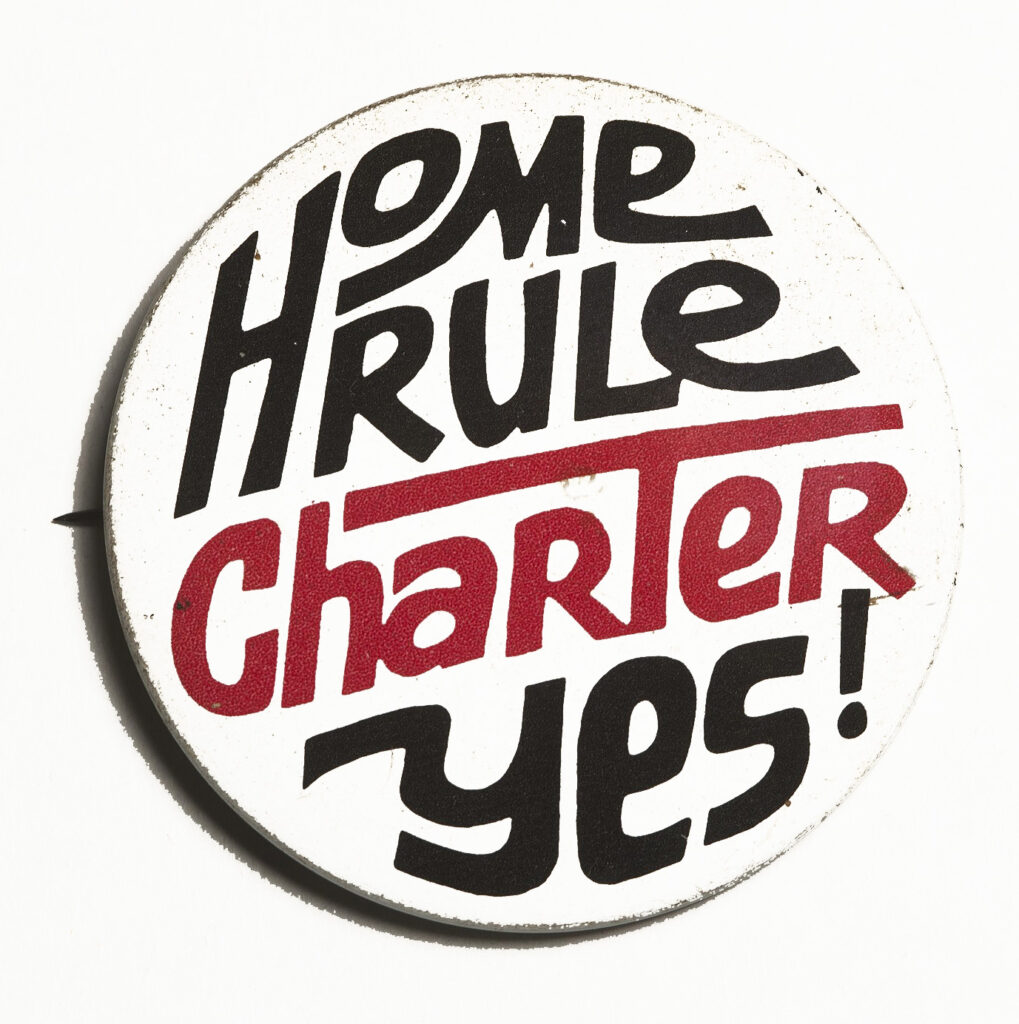
Why the DC home Rule Project?
This project is an effort of the DC Cultural Narrative and Jerome S Paige and Associates and serves as a forum to explore the evolution of home rule since 1974.
The core topics that we explore within this project include:
- Who gets to govern at home?
- Who gets to live at home?
- Who gets to work at home?
- Who gets to voice at homee?
- Who gets to gain economically at home?
- Who gets to thrive at home?
- Who gets to tell their story at home?
What is DC Home Rule?
According to Wikipedia…
The District of Columbia Home Rule Act is a United States federal law passed on December 24, 1973, which devolved certain congressional powers of the District of Columbia to local government, furthering District of Columbia home rule. In particular, it includes the District Charter (also called the Home Rule Charter), which provides for an elected mayor and the Council of the District of Columbia. The council is composed of a chair elected at large and twelve members, four of whom are elected at large, and one from each of the District’s eight wards. Council members are elected to four-year terms.
Under the “Home Rule” government, Congress reviews all legislation passed by the council before it can become law and retains authority over the District’s budget. Also, the President appoints the District’s judges, and the District still has no voting representation in Congress. Because of these and other limitations on local government, many citizens of the District continue to lobby for greater autonomy, such as complete statehood.
The Home Rule Act specifically prohibits the council from enacting certain laws that, among other restrictions, would:
- lend public credit for private projects;
- impose a tax on individuals who work in the District but live elsewhere;
- make any changes to the Heights of Buildings Act of 1910;
- pass any law changing the composition or jurisdiction of the local courts;
- enact a local budget that is not balanced; and
- gain any additional authority over the National Capital Planning Commission, Washington Aqueduct, or District of Columbia National Guard.